
The Best YouTube Datasets in 2026
YouTube is massive, hosting billions of active users and millions of new videos uploaded daily. The platform offers a treasure trove of data that can reveal user behavior, content trends, and engagement patterns. As we move into 2025, several platforms are providing high-quality YouTube datasets to help make sense of all this information.
These datasets are incredibly valuable for marketers, developers, and data scientists looking to gain insights that can inform their strategies. In this article, I’ll explore some of the best YouTube datasets available, highlighting their features, pros, cons, and pricing, so you can make an informed decision on which one suits your needs.
TL;DR
- Bright Data — Comprehensive, scalable YouTube data for large projects.
- Apify — User-friendly YouTube scraping with preset templates.
- Oxylabs — Reliable, high-scale YouTube scraping with global reach.
- Decodo — Flexible, analytics-driven YouTube datasets and insights.
- Zyte — Powerful, global-scale scraping with robust anti-blocking.
- Scrapinghub — Cloud-based, customizable YouTube scraping projects.
- DataMiner — Browser-based scraping for small to medium YouTube tasks.
Key Features of YouTube Datasets
A good YouTube dataset should include various types of data to help you understand content trends and user engagement. Here are the key features to look for:
- Video Data: Includes titles, descriptions, tags, and video IDs.
- User Engagement: Data such as likes, dislikes, views, comments, and shares.
- Channel Data: Includes the number of subscribers, total views, and channel categories.
- Video Performance Metrics: Data on retention rates, click-through rates, and watch times.
- Trending Data: Data on what videos are trending at a specific moment.
- Demographic Data: Information on the geographic location and demographics of viewers.
- Social Media Insights: Mentions and shares across other platforms like Twitter.
- Metadata: Includes details like video upload date, resolution, and video format.
Top 7 Youtube Datasets to use in 2025
YouTube offers valuable data for marketers, developers, and analysts. Here, we highlight the top 7 YouTube datasets that can help you gain insights and optimize your strategies.
Bright Data

Bright Data is widely regarded as one of the top providers for YouTube public data scraping. The platform offers comprehensive datasets that include detailed video and channel data, user engagement metrics, and real-time insights. Whether you need to scrape millions of videos or monitor a select group of content creators, Bright Data allows for high scalability and flexibility.
The platform offers powerful filtering options and customizable scraping parameters, making it suitable for a range of projects from academic research to marketing analysis. While it’s one of the more expensive options available, its reliability and ability to handle large datasets make it a top choice for professionals looking to dive deep into YouTube data.
Key Features:
- Comprehensive Video and Channel Data: Includes video titles, descriptions, tags, and engagement metrics.
- Real-Time Data: The platform offers up-to-date scraping, which is critical for tracking trends.
- Customizable Scraping: Bright Data allows users to set parameters for targeted scraping.
- Advanced Filtering: Helps users focus on specific types of data, such as specific video categories or locations.
Pros:
- Scalable for large projects.
- Comprehensive and reliable data.
- Flexible pricing options for various users.
- Full control over the data points.
- Includes a fully managed solution.
- Fully compliant, only public data.
Cons:
- Can be expensive for small businesses or individuals.
Pricing: Bright Data uses a pay-per-usage pricing model, starting at around $500 per month, with more expensive plans for larger data scraping needs.
Apify
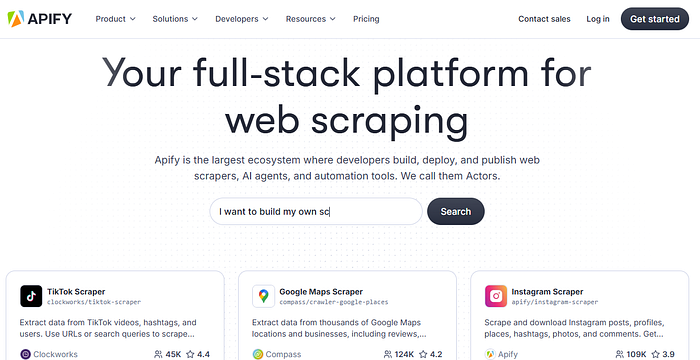
Apify is a user-friendly web scraping platform that enables users to collect data from YouTube easily. The platform allows users to gather a wide range of information, including video metadata, user engagement metrics like likes and comments, and channel statistics. Apify stands out for its simplicity, making it an excellent choice for non-technical users who need reliable data without the complexity.
Additionally, Apify offers real-time data scraping, which is vital for tracking trending videos and analyzing viewer interactions. Apify has affordable pricing plans and easy-to-use pre-built scraping templates. It makes integrating YouTube data into research, marketing, and business strategies simple, even without technical expertise.
Key Features:
- Video and Channel Scraping: Get access to detailed data, including likes, comments, views, and more.
- User Engagement Metrics: Track user interaction data, such as likes, shares, and comments.
- Trends Tracking: Apify helps users track which videos are trending, helping you stay up-to-date.
Pros:
- Simple interface, ideal for non-technical users.
- Affordable pricing for small businesses and individuals.
- Excellent documentation for setting up scrapers.
Cons:
- Limited customization options for advanced users.
- Data limits on lower-tier plans.
Pricing: Apify offers plans starting at $39 per month, with higher plans offering more features and data capacity.
Oxylabs

Oxylabs is a premium web scraping service known for its scalability and high-quality data collection, including YouTube data. The platform offers an extensive range of data scraping options, including video and channel statistics, engagement metrics, and geographic insights. One of Oxylabs’ key strengths is its ability to scrape large volumes of data reliably, which is ideal for large businesses and enterprises.
The platform also includes advanced filtering options and multilingual support, making it suitable for international users. While Oxylabs is on the higher end of the price spectrum, its excellent infrastructure and accuracy make it a top choice for those who need robust data for detailed analysis and reporting across global markets.
Key Features:
- Large-Scale Scraping: Can handle large data scraping tasks without compromising speed or reliability.
- Geographic Data: Collects location-based data, which is valuable for global businesses.
- Multilingual Support: Supports data scraping in multiple languages, making it ideal for international analysis.
Pros:
- Reliable infrastructure for high-scale scraping.
- Excellent for global data scraping.
- Accurate and precise data collection.
Cons:
- Pricing is higher compared to other platforms.
- Some technical setup required for optimal use.
Pricing: Oxylabs starts at approximately $49 per month for smaller-scale use, with custom pricing for larger datasets.
Decodo
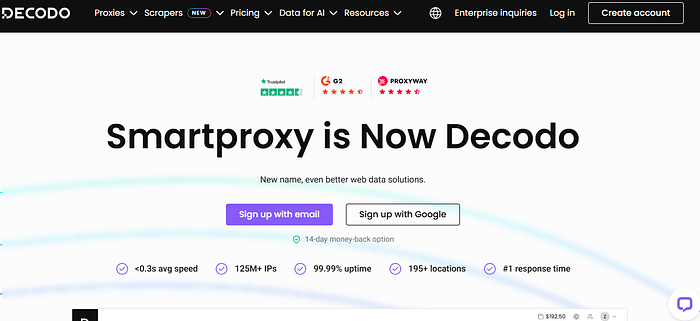
Decodo is a powerful platform for YouTube data that combines real-time scraping with advanced analytics. It’s perfect for users who need detailed insights into videos, channels, and user engagement. Decodo offers customizable scraping, so users can gather data based on specific needs like trending videos, video performance, or audience demographics.
Decodo also provides advanced analytics tools to turn raw data into useful insights. Decodo is more affordable compared to some top providers but still offers many features, making it an excellent choice for small to medium businesses and researchers who need flexible, detailed reporting.
Key Features:
- Customizable Scraping: Users can target specific data points, including user engagement and video performance.
- Advanced Analytics: Offers in-depth analysis tools for interpreting scraped data.
- Real-Time Data: Provides regular updates to ensure the data remains current.
Pros:
- Advanced analytics capabilities.
- High level of customization for specific needs.
- Affordable pricing for mid-sized businesses.
Cons:
- Somewhat complex for beginners.
- Limited customer support.
Pricing: Decodo’s pricing starts at $100 per month, with higher-tier plans offering more advanced features.
Zyte
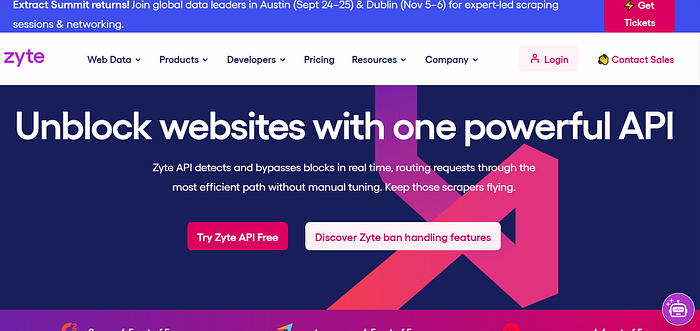
Zyte is a top web scraping service for collecting YouTube data. It allows users to efficiently gather large amounts of data, including video metadata, user interactions, and channel stats. Zyte uses advanced proxy management and anti-blocking technology, ensuring smooth data collection, even at a large scale. The platform is easy to use and can scale to fit both small businesses and large enterprises.
Zyte also supports global data scraping and multiple languages, making it a great choice for international projects. While it can be pricier than other options, its customization and accuracy make it a reliable tool for large-scale YouTube data scraping.
Key Features:
- Advanced Web Scraping: Zyte allows users to scrape large amounts of YouTube data without interruption.
- Proxy Management: Ensures that scraping tasks avoid IP blocks by using advanced proxy management.
- Automated Data Extraction: Collects video data, engagement metrics, and channel statistics automatically.
Pros:
- Excellent for large-scale data scraping.
- Robust anti-blocking technology ensures smooth data collection.
- Global data scraping for international analysis.
Cons:
- High cost compared to other platforms.
- Requires some technical understanding for full use.
Pricing: Zyte’s pricing starts at $100 per month, with prices scaling higher for large data needs.
Scrapinghub
Scrapinghub is a flexible platform made for complex web scraping tasks, including YouTube data. It uses the Scrapy framework to collect detailed information like views, likes, comments, and other video stats. Scrapinghub runs in the cloud, so users can scale their data collection without dealing with servers. It offers both easy and advanced scraping tools, which makes it useful for beginners and experts alike.
Users can also customize their scraping tasks and automate the process. This makes Scrapinghub a strong option for people who need large YouTube datasets for research or business. Pricing depends on how much you use, and it fits different project sizes.
Key Features:
- Customizable Projects: Set up custom scraping projects tailored to specific data points or channels.
- Cloud Scraping: Scrapinghub operates in the cloud, eliminating the need for local infrastructure.
- Scalable: Scrapinghub is capable of handling large-scale scraping tasks with ease.
Pros:
- Flexible and customizable for advanced users.
- Scalable for large data projects.
- Cloud-based infrastructure makes it reliable.
Cons:
- Learning curve due to the use of the Scrapy framework.
- Pricing can be expensive for large projects.
Pricing: Scrapinghub offers plans starting at $200 per month, with custom pricing available for larger scraping needs.
DataMiner
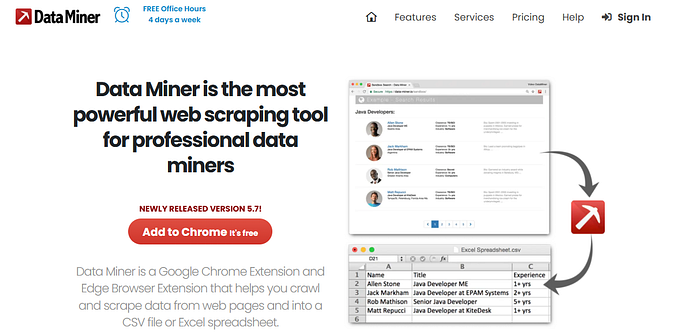
DataMiner is a browser-based tool for scraping YouTube data. It works inside Chrome and Firefox, so you can start scraping right away without extra setup. Users can create custom scraping recipes to collect specific details like video titles, tags, views, likes, and comments.
The data can be exported in formats like CSV, Excel, and JSON for offline use. DataMiner is best for small to medium tasks and may not handle very large projects. Still, it’s a simple, affordable, and effective tool for individuals and small businesses who need quick access to YouTube data.
Key Features:
- Browser Extension: DataMiner works directly within Chrome or Firefox, making it incredibly easy to collect data.
- Custom Scraping Recipes: Allows users to create custom scraping rules for specific video data.
- Export Options: Supports data exports in various formats, including CSV, JSON, and Excel.
Pros:
- Simple and user-friendly interface.
- Affordable for users who need moderate data scraping capabilities.
- Flexible data export options.
Cons:
- Limited to smaller-scale scraping.
- Lacks some advanced features of other platforms.
Pricing: DataMiner’s premium version costs around $30 per month, while the free version has limited functionality.
Conclusion
Scraping YouTube data is a smart way to gain valuable insights. Bright Data is the most powerful option and works well for large projects, but it’s more expensive. For smaller budgets, Apify, Oxylabs, and Zyte offer great features and are easier on the wallet. Decodo is better for more targeted data needs, while DataMiner is an excellent pick for small-scale use.
Each tool has its strengths. The right choice depends on how much data you need, how much you can spend, and how technical you are. As YouTube keeps growing, using these tools will be more important than ever for collecting and understanding useful data.